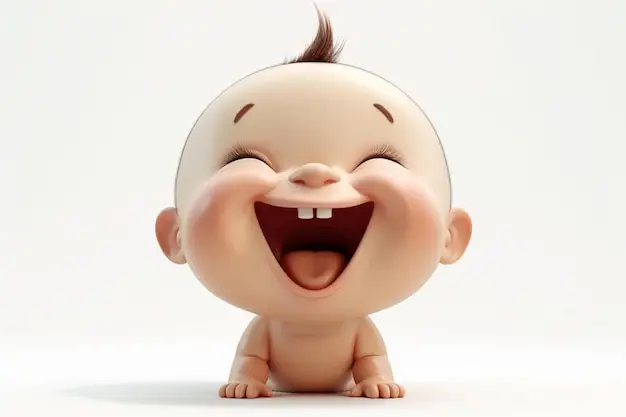
Waiting for your baby's first laugh is an exciting and unforgettable moment for every parent. Laughter is a universal language that brings joy and warmth to our lives, and your baby's first laugh is a special source of happiness. In this blog post, we will answer the question, "When can you expect your baby's first laugh?" and explain the factors that lead to the emergence of this joyful expression.
The First Stages of Baby Laughter:
1. Social Connection: The foundation of your baby’s laughter is built on social connections and bonding. Your baby watches your facial expressions, listens to your voice, and begins to understand the joy of shared moments. 2. Smiles and Giggles: Before a full-blown laugh emerges, your baby will likely start with smiles and giggles. These first expressions of joy usually begin around 2-3 months of age, when your baby is more receptive to stimuli. 3. Tickling and Play: Incorporating play activities like gentle tickling or funny facial expressions can elicit the first giggles. Pay attention to your baby’s cues and reactions during interactive play. 4. Between 3 and 4 Months: Many babies experience their first real laughs at 3-4 months of age. Simple games like hide-and-seek or gentle tickling can elicit these precious giggles. 5. Strengthening Bonds: Laughter becomes a way to connect with caregivers and the environment. Your baby may laugh in response to your laughter, creating a shared period of joy.
Creating an Environment Full of Joy:
Facial Expressions: Make exaggerated facial expressions, such as smiling broadly or sticking out your tongue. Your baby will respond to these visual cues with a smile and eventually, a laugh. Playful Sounds: Experiment with different sounds, such as cooing, singing, or making funny noises. Playful sounds attract your baby’s attention and contribute to a joyful atmosphere. Interactive Games: Engage in interactive games, such as playing hide-and-seek or gentle tickling. These activities not only encourage laughter, but also strengthen the bond between you and your baby. Shared Laughter: Laughing with your baby reinforces the joy of shared experiences. Create a positive and playful environment that encourages laughter as a form of communication.
Individual Differences:
Every baby is unique and their development time can vary. While some babies can show small giggles and smiles as early as 3 months, others may be a little later, and many don't experience their first big laugh until 6 months. It's important to be patient and let your baby develop at their own pace.
When to see a pediatrician:
If your baby hasn't shown signs of smiling by 6-7 months, it's a good idea to consult your pediatrician. While individual differences are normal, your pediatrician can provide you with reassurance and guidance if needed.
Conclusion:
Waiting for your baby's first laugh is a moment of joy and excitement. By creating a positive and playful environment, you contribute to the development of your baby's sense of humor and shared joy. Cherish those first little smiles, celebrate those contagious laughs, and enjoy the unique journey of discovery and joy that unfolds as your baby learns the beautiful language of laughter.